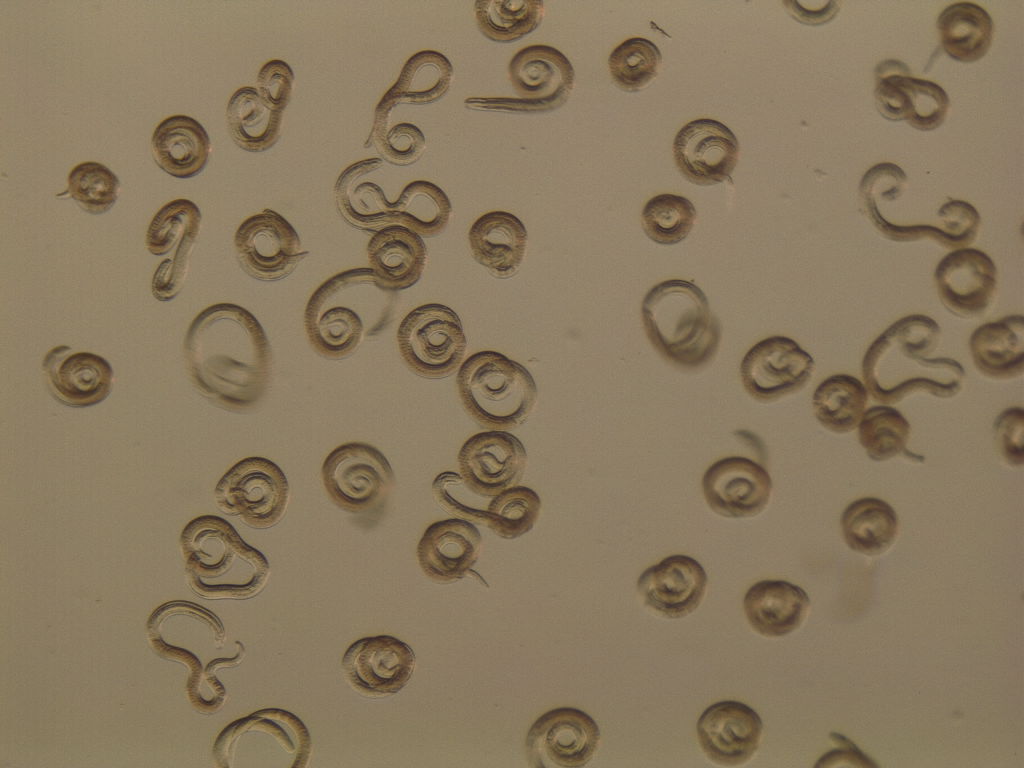

Clinical context
Trichinellosis (trichinosis) is a parasitic disease caused by roundworms of the genus Trichinella. While T. spiralis is the most widespread species, others like T. pseudospiralis, T. nativa, T. nelsoni, T. britovi, and T. papuae are also known to infect various wild and domestic animals globally. T. zimbabwensis infects crocodiles in Africa, but has not been linked to human disease.
The parasite completes its life cycle within a single vertebrate host, which serves as both definitive and intermediate host. Transmission continues when another host consumes infected tissue. In domestic settings, pigs and rodents are common hosts, while wild animals such as bears, moose, and wild boars are typical sources of human infection. Humans acquire trichinellosis by eating undercooked meat containing larvae, which are released in the stomach, then mature into adult worms in the small intestine. After about a week, the females release larvae that migrate to skeletal muscles, where they encyst—except in species like T. pseudospiralis and T. papuae, which do not form cysts.
Diagnosis is primarily clinical and confirmed through serology or detection of larvae in tissue samples.
Our products
- TS01: Trichinella spiralis, ES products
- TS02: Trichinella spiralis, whole extracted antigens from larvae
- TS03: Trichinella spiralis, gDNA